Fort Myers Quakers

Religious Society of Friends

  • Fort Myers Quakers
  • Home
  • About
    • Quaker Beliefs: The Testimonies
    • About Quaker Beliefs
    • Why Quakers Speak Out
    • Our Meeting
    • How We Worship
    • Sunday Schedule
    • Sunday School
    • Queries
    • The Wider Quaker World
      • Conscientious Objector Status
        • The Basis of the Peace Testimony
        • Registration for the Draft
        • Are you a Conscientious Objector?
        • How to Qualify for Conscientious Objector Status
        • How to Discern Your Path if You are a Conscientious Objector
        • How to Document Your Conscientious Objector Beliefs
        • Resources on Conscientious Objection
  • Events
    • News…
  • Community
    • Fort Myers Monthly Meeting Directory
  • Contact Us – 239-318-0538
You are here: Home / Archives for Profile

March 29, 2021 By Pat Iyer Leave a Comment

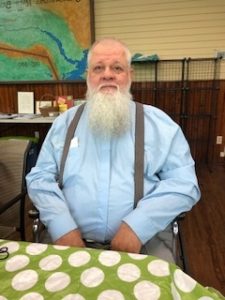
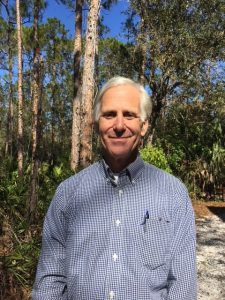
Tom Dudley Fennell

Sadly, our Quaker community lost Tom Dudley Fennell when he contracted Covid in the hospital. Tom and Nancy spent many years in Fort Myers before moving to Sebring to be closer to their son. Although it was a distance, Tom and Nancy made the 2 hour one way trip on a frequent basis, and then worshipped with us virtually when we stopped meeting at the Calusa Nature Center.

Here is an overview of Tom’s life originally published as a blog.  

Had it not been for orchids, it is likely that Tom Dudley Fennell would not have been a doctor.

Tom was born on July 4th. For years, he thought the July 4th celebrations were for him. Because Tom’s father was employed by the U.S. Department of Agriculture, Tom’s early years were spent in Florida, Haiti and Puerto Rico. After finishing 5th grade, Tom and his brother had the opportunity to go to boarding school in Michigan. Cranbrook School had a great reputation. Tom found living in boarding school was easy if you behaved yourself, and he was raised to follow the rules. He loved this Episcopalian school and left it at graduation to enroll in Harvard University. Although he originally planned to be a teacher, he got interested in medicine, but there were no scholarships available and his family could not afford to send him to medical school.

Tom’s grandfather developed a business growing orchids. After buying 25 acres of land near Miami in 1923, he found the land was ideally suited to grow orchids. His orchid farm became a tourist attraction, called the Orchid Jungle. Phillip Wiley wrote an article about this farm, which was published in the Saturday Evening Post. The year before the article came out, the business grossed $50,000. The revenue increased to $500,000 after the article was published.

Orchid money sent Tom to Duke University Medical School. The draft was in effect when he graduated in 1957, and since there were no paid internships, Tom joined the Air Force.   The Air Force eventually stationed him in Washington DC, where he served as a general medical officer for three years at Andrews Air Force Base.

While completing his undergraduate education at Harvard, Tom met and married his first wife. They had three children. Tom’s wife developed a panic disorder early in their marriage. Her condition was not well understood in those days and treatment options were limited. She spent much of her time hospitalized; Tom’s mother pitched in to help with the children. Tom made the decision to end the marriage shortly after their third child was born addicted to the illegal medications that his wife took.

Transition to Psychiatry

“Diseases bored me but people did not”, he says to explain his growing interest in psychiatry. He completed additional training in psychiatry at the University of Miami, studying under a top notch faculty of psychiatrists. Many were physicians who fled from Cuba after Castro took over. Tom found that psychiatry was a great match for his desire to take care of people. He stayed on the clinical faculty of University of Miami for 25 years, while also setting up and running a psychiatric practice. He provided psychotherapy to patients, regardless of their ability to pay. “I was one of the few poor doctors”, he explained.  

Tom and Nancy met when she was working as a psychiatric aide at the University of Miami Psychiatric Institute. Nancy was divorced at the time and had an adopted a boy named Jeff. Nancy was working on gaining admission to graduate school to become a psychologist. The chief nursing administrator of the hospital, who was instrumental in guiding Tom as a psychiatric resident, asked Tom to supervise Nancy. Nancy’s life changed when she got admitted to Florida State University.

After Nancy moved to Tallahassee, Tom and Nancy started a long distance courtship. Nancy completed her 4 year program in 3 years. Her major professor insisted she be married before she did an internship; Nancy and Tom were too busy to plan their wedding. The professor’s secretary made all the arrangements for their wedding – Tom and Nancy just had to show up. They continued to live and practice in Florida.

Religious Beliefs

“I don’t want to go back to Sunday School”, Tom told his mother after his first experience at age 5. The uncharacteristically rebellious boy had no formal religious training until he was exposed to the Episcopalian Church in Haiti and in Michigan at Cranbrook. He found he liked the hymns and the music, but he started questioning some of the wording in the creeds. He omitted saying the parts he could not believe in until by the time he was a senior at Cranbrook, he could not agree with any of them.

At Harvard, Tom attended the Unitarian Church until he realized he could not endorse their support of some political issues. He became an agnostic.

Introduction to Quakerism

Nancy and Tom lived on 60 acres of forest in Highlands County. Nancy began attending Ft. Myers meeting and Tom joined her at a meeting for worship 6 months later. The first time he walked into Iona House, he felt an overwhelming powerful feeling that he had come home. He did not expect this. It was like a lightening bolt. He discovered that Quakers had no specific creed – he could sit and listen to God.

Tom found the Quaker values that resonated the most with him are integrity, community, peace and earth care. He got rid of his gun collection 4 years ago when he realized he could not shoot anyone.

“God opened doors for me.” Tom explained.  He used to think he was “just lucky” but he realized that his life was guided by more than luck. He wanted to care for people and God opened the doors so that he could.
Filed Under: Blog, Profile

April 27, 2019 By Pat Iyer Leave a Comment

Memorial Minute for Larry Scott Butler

Larry Scott Butler

The Fort Myers Monthly Meeting grieves over the death while simultaneously celebrating the life of Larry Scott Butler, the last of our Meeting’s founding members.

Larry was born Seventh Month 29, 1943 in Clearfield, Pennsylvania. to William and Marion Butler. While in high school he was a circuit lay preacher for small family Methodist churches in the mountains. In 1965, he graduated from Dickinson College, Carlisle, Pennsylvania with a major in history. He was a founder of a liberal discussion group on campus called Concern and a founder of a Congress of Racial Equality (CORE) chapter in the town of Carlisle. His senior year he worked for the Pennsylvania State Council of Churches as a pastor in migrant labor camps where he also lived.

He became a convinced Friend and was accepted into membership by Warrington Monthly Meeting in Wellsville, Pennsylvania. After graduation he worked for the Summer Community Organization and Political Education (SCOPE) project of the Southern Christian Leadership Conference of which Dr. Martin Luther King, Jr. was president.

Bayard Rustin, noted Quaker, trained those SCOPE volunteers. Larry led a successful voting registration drive and political education campaign in Eufaula, Alabama where he was briefly jailed. He moved to Philadelphia, transferred his membership to Central Philadelphia Monthly Meeting and taught history and religion at Friends Select School from 1970-1980. He received his Master’s Degree from Temple University with attention to Quaker American history.

Larry was the first clerk of the Philadelphia Yearly Meeting’s Committee on Homosexuality which had a major impact on educating Friends on gay and lesbian issues. The organization later evolved into Friends for Lesbian, Gay, Bi-sexual, Transgender and Queer Concerns. With a small group of other Quakers he was a founding member of Unami Monthly Meeting in Pennsburg, Pennsylvania.

In 1980, Larry moved to Florida and lived on a boat for a number of years. He became a member of Miami Monthly Meeting. In 198, he began working with the developmentally disabled and helped start a horticultural vocational training program in Miami Beach called The Log Cabin Plant Nursery. In 1986, he moved to Fort Myers, Florida and co-founded the Fort Myers Monthly Meeting. He continued his work with the developmentally disabled, concentrating on men with low IQ and issues of violence.

In recent years, Larry was beset by various health concerns, including the amputation of one leg. These health challenges never stopped his commitment to life in its fullest. He continued until his death to be the primary caregiver to a beloved developmentally disabled housemate. Larry remained a vibrant part of the life of the Fort Myers Meeting, serving on a Clearness Committee only weeks prior to his passing, and often sharing in vocal ministry at our meetings for worship.

In his last years, Larry worked to organize and document the books and papers he accumulated during a life active in Quaker issues, and these contributions have now been accepted into the Quaker Historical Library of Swarthmore (in Philadelphia) in a special collection named for him, where they will be permanently available to scholars of Quaker history.

Larry passed away on December 15, 2018. He is survived by his partner of many years, Wandson D. DeOliveira and Wandson’s children, Priscilla and Samuel, whom Larry helped to raise. He had two brothers who died before him, and is survived by two sisters, Susie Barley and Diane Butler.

Approved by Fort Myers Monthly Meeting
Of the Religious Society of Friends
3rd month 10th day 2019

Filed Under: Blog, Profile Tagged With: Larry Scott Butler

January 11, 2019 By Pat Iyer Leave a Comment

Carolyn’s Path to Quakerism

What is it like to be a life long Quaker? Most of us come to Quakerism later in life. Carolyn was born into it. Carolyn’s mother came from many generations of Friends; Carolyn’s father was a convinced Friend.

Romance at CPS Camp

Carolyn’s parents met at CPS camp – Civilian Public Service. (These camps operated from 1941 to 1947 to provide “work of national importance” for conscientious objectors. After time spent in base camps, many men opted to perform Detached Service, where they volunteered for special project work in units within public health, state mental hospitals, state training schools, dairy testing or other farm work, smoke jumping, government research, human guinea pig research, or with the National Service Board for Religious Objectors [NSBRO] and related agencies on relief and other projects.)
Carolyn’s parents had 3 children: Carolyn’s older brother, Carolyn and her younger brother.

Move to East Coast

After living in Illinois where her father taught at University of Illinois in Champagne, Carolyn moved to the Philadelphia area where her father got a job with the American Friends Service Committee. Carolyn entered Lansdowne Friends School in fifth grade.

Carolyn grew up with the activities of activist Quakers: wearing arm bands and participating in vigils against the war. In high school, Carolyn read about war and began to question organized religion. She went to Wilmington College, where she met her husband, and then graduated from Michigan State College. She earned a Bachelor’s Degree in Elementary Education and a Masters Degree in Special Education.

Return to Midwest

David and Carolyn settled in Barnesville, Ohio, where she worked as a teacher of children with learning disabilities. They bought a 55-acre farm and were “back to the landers”. They built their first home after camping in tent trailers. The house did not have central heat, and they went to laundromat to wash their clothes. Their next house was built by contractors and they saved the original house as a guest house and shop. “We were flower children of the 70’s”, Carolyn laughs.

Carolyn was encountered a different form of Quakerism at Barnesville where she attended a conservative branch of Quakerism with an unprogrammed meeting. “They thought AFSC was communistic.” Ohio had three forms of Quakerism: conservative unprogrammed, liberal unprogrammed and liberal programmed. Carolyn grew up with liberal unprogrammed meetings in the Philadelphia area.

Exploring Ecuador

A trip to South America – how exciting. A student where David was teaching invited them to come to Ecuador to meet her family. Their only cost was going to be a plane ticket. Then David’s brother who was an airline steward was able to get them tickets so their 25th wedding anniversary was planned around an inexpensive trip to Ecuador.

Once in Ecuador, the trip involved a big hike to get to the girl’s family home. They met an Ecuadorian family with a girl who came to live with Carolyn and David for 2 years during high school and became like a daughter to them. Carolyn and David’s lives have become intertwined with another Ecuadorian family with 5 children are helping to support this family. If Carolyn moved anywhere it would be to Ecuador. She loves being outdoors there and is spending the month of August in Ecuador.

Most of Carolyn’s adult life she has been on a quest questioning her spirituality. She does not know who or what God is and conceives God as energy that connects us all with animals and plants. She came to Fort Myers Monthly Meeting out of curiosity and to meet like-minded people. She questions the peace testimony – is it pie in the sky to believe that the world can come to peace? Would it be ever possible to have peace?

Carolyn is drawn to the concept of listening and of the light in every person as one of the components of Quakerism.

Carolyn and David are also drawn to teaching and music. They play at the Listening Room at the All Faith Universalist Church. Having sold their Ohio home, they are now year-round Florida residents.

Interview by Pat Iyer

Filed Under: Blog, Profile Tagged With: Quakerism

February 17, 2018 By Pat Iyer Leave a Comment

Chris at the Fort Myers Quaker Meeting

Chris R is a New Yorker, although he has shed his Long Island accent. He was born in 1956 and grew up on the south shore of Long Island surrounded by boats and water sports. He had a motor boat by the time he was 12. “The 60’s were a wonderful time to grow up in the suburbs of New York”, he says. Chris grew up in an extended family; his German grandparents lived on their property in a converted garage. Chris is the youngest of three, with his sister Donna and his brother Chip.
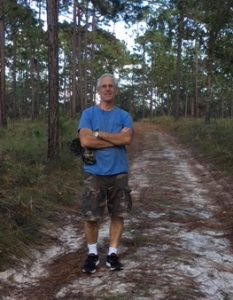
The family attended the Episcopalian Church, but the family was not particularly religious. Chris’ mother made sure the kids went to church, but after they were confirmed, there was no pressure to continue to attend. His family were ardent Democrats who were liberal and antiwar, and worked in the Civil Rights movement.

Chris’ mother stayed home to raise the kids. She loved to garden and cook. She entered the work force after the children grew up and became an executive secretary in Manhattan. Chris’ father was a history teacher and a football coach who went on to earn his Doctorate. He taught at Baldwin High School. Chris attended that high school for a year before he transferred to an all-boys prep school in upstate New York called Millbrook. There he played football, and his team went undefeated his senior year, which is still a fond memory for him.

When Chris applied to colleges, he was delighted to get into Columbia University. After two years in the country, he was eager to move to New York City. At Columbia, he majored in Philosophy, and earned his Bachelor’s Degree in 1979. Chris also developed his artistic abilities in figure drawing and landscape painting.

After graduating from college, Chris married an artist and they moved to Munich, Germany where Chris worked as a silk screen designer for a T shirt company. After the business failed, Chris’ wife went to Berlin and he hitchhiked around Italy, where he lived for a while on a farm in Tuscany and picked grapes. (He denies ever stomping on grapes in a big barrel.)

When it was time to return to the U.S., Chris’ wife stayed behind and became a punk artist in Berlin. Chris moved to Seattle where he lived with friends in a classical music commune. When he returned to New York, his wife came from Germany, and Chris got a job teaching in a Catholic school in the Bronx. This Catholic school was run by Marist Brothers who believe you should teach where the need is greatest. Chris is very grateful that he learned the craft of teaching from these good men.

After his marriage fell apart, Chris moved to San Francisco. There were no teaching jobs available, so he worked in a restaurant and worked his way from being a bus boy to a respected waiter in an upscale restaurant. He went through a divorce and his wife later contracted and died from AIDs associated with IV drug use.

Chris decided to move to Sarasota where his parents lived; he simultaneously worked in a restaurant and studied for a teaching degree. After work one night, he was intrigued by an ad for the Army that not only promised to help you be all you can be but to give you college money as well. So, he joined the US Army Infantry for 2 years with the condition that he wanted to be posted in Germany. He loved Germany and drove a Bradley in the Desert Storm war in Iraq. Since the Army gave Chris most weekends off, he bought a car and had a great time traveling around Europe.

Chris returned to Florida and used his college money to get a teaching certificate. He got a job with an ex Navy Seal in a school that combined academics with windsurfing and kayaking. This was his introduction to the sports, and he ran a kayak shop in Port Charlotte while taking classes for his teaching degree. He met Vicki S in these college years.

Next, Chris taught in a prep school in Sarasota where he noticed the sharp contrast between the spoiled kids who talked back and the military where people obeyed orders. He admits that this sometimes made him angry. He decided to seek out the Quakers because he knew that they had a peace testimony and that perhaps they could help him to deal with conflict in a loving and peaceful way.

Around this time Chris discovered the Baha’i religion and got deeply involved with their community. While he still loves the theory of the faith, he found their method of worship to be quite boring. He then met a woman who had been teaching in China, who put him in touch with a Baha’i recruiter for international schools. So, Chris investigated that and moved to China for two years to teach 4th grade Taiwanese, Japanese and Korean kids in a special international school.

Chris returned to Florida, started painting again, and got into substitute teaching, which he says he loved. He says, “I got pretty good at it. Although it was not well paid, it was great fun and it gave me lots of freedom and a fine quality of life.” He also had an opportunity to live in Giverny, France for 2 summers to focus on his plen air landscape painting.

Chris retired from teaching at age 61. He is currently living at his sister’s house with her husband and his mother. He wants to get more involved in discussing Quaker theology and practice. He knew within the first 15 minutes of his first Quaker meeting that this form of worship was a perfect fit for him. He loves the spiritual power of the unprogrammed meeting: “I believe that it is an ideal way to approach God, to love Him, to worship Him, and to serve His Noble Cause.”

Filed Under: Blog, Profile

  • 1
  • 2
  • 3
  • Next Page »

Recent Posts

  • The War in Israel and Palestine
  • I expect to pass through this world but once…
  • We humans make things so difficult…
  • Donate for Gaza
  • (no title)

Recent Comments

    Archives

    • January 2025
    • December 2024
    • November 2024
    • October 2024
    • August 2021
    • March 2021
    • June 2019
    • May 2019
    • April 2019
    • February 2019
    • January 2019
    • February 2018
    • January 2018
    • December 2017
    • April 2017
    • March 2017
    • February 2017
    • January 2017
    • December 2016
    • November 2016
    • October 2016
    • September 2016
    • August 2016
    • July 2016

    Categories

    • Blog
    • Profile
    • Uncategorized
    • Video

    Categories

    • Blog
    • Profile
    • Uncategorized
    • Video

    Search Our Site

    Connect With Us

    • Facebook
    • YouTube

    Handcrafted with on the Genesis Framework